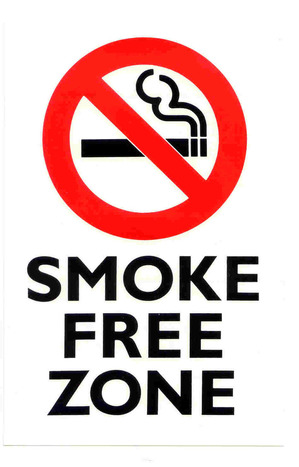
I found an article on Huffington Post about a a very special hospital in Myanmar. It was founded and was funded (and still is) by Muslims in Myanmar in 1937 when the country was still called Burma. The institute provides medical care for the poor people free of charge, and welcomes all people of any religion. As the article says, it is remarkable that the hospital is run so for 80 years considering the status of the Muslims in the country. In Myanmar, the majority of the population is Buddhist, while Muslims are only 4%/.The Buddhist monks openly incite violence to Muslims. The article tells how remarkably the institution is run till today even in such disadvantageous condition. I am awed by the people keep this institution running.
What surprised me linguistically is not the content of the article but the naming of the hospital.
Muslim Free Hospital
I wondered where the word FREE falls on. If it was working like a suffix, Muslim-Free, the institute would turn into a really discriminative one, not accepting any Muslims (look at the definition of the suffix in Roki's article Smoke-free.) And thinking about the proportion and the condition of the Muslims in Myanmar, the possibility of that cynical reading could not be ruled out.
Since there is no hyphen linking Muslim and Free, it can be read 'Free Hospital', and it must be read like that.
Comma or hyphen could have done a job to make a clearer understanding. Punctuation does matter.
"Philology" --- 1. Love of learning and literature; the branch of knowledge that deals with the historical, linguistic, interpretative, and critical aspects of literature. Oxford English Dictionary
2017年2月27日月曜日
2016年12月25日日曜日
A beautiful English word
Humour takes a bit of intelligence to understand or to present, so I respect comedians who challenge and do their act not in their native language.
I recently found a movie on Youtube of a Japanese comedian, Yuriko Kotani, doing her acts in England. She makes good use of her foreign identity and her slow Japanese accented English. The main theme of her humour is the cultural gap she feels living in in the British society, and I can relate to her completely.
And she talks of a beautiful English word she loves, "-ish".
Yes, as she says, we don't have this word in Japanese. And although you do hear it used by some Americans, it is not like the way the British use it.
'Say, we meet one-ish?'
-'Is he nice?'
-'...Hmm, ish.'
Isn't it nice.
It does not rigidly determine or define, the speaker's responsibility of his / her statement is lightened, the listener's assessment towards the matter can be taken into consideration.
It leaves the matter vague, it is in a way being irresponsible to your speech, but looking from another view, it is allowing the space for the judgement of the person you are talking to, a form of respect.
I consider it shows a very British attitude.
I recently found a movie on Youtube of a Japanese comedian, Yuriko Kotani, doing her acts in England. She makes good use of her foreign identity and her slow Japanese accented English. The main theme of her humour is the cultural gap she feels living in in the British society, and I can relate to her completely.
And she talks of a beautiful English word she loves, "-ish".
Yes, as she says, we don't have this word in Japanese. And although you do hear it used by some Americans, it is not like the way the British use it.
'Say, we meet one-ish?'
-'Is he nice?'
-'...Hmm, ish.'
Isn't it nice.
It does not rigidly determine or define, the speaker's responsibility of his / her statement is lightened, the listener's assessment towards the matter can be taken into consideration.
It leaves the matter vague, it is in a way being irresponsible to your speech, but looking from another view, it is allowing the space for the judgement of the person you are talking to, a form of respect.
I consider it shows a very British attitude.
2016年11月24日木曜日
"Smoke-free"
Walking
through the campus, I often see posters or signs that says
Works Cited:
Butterfield, Jeremy. ed. Fowler's Dictionary of Modern English Usage. 4th ed.Oxford Clarendon, 2015.
“smoke-free”
Being “free”
sounds like “you can do anything as you wish.”
You feel released from some ties and
obligations, taking the word sounds highly positively.
Yet, you cannot take "smoke free" as such and smoke as you like. It means actually the opposite (as the sign clearly shows): "you are prohibited from smoking."
In this sense of "free," OED defines,
3 (c).
Clear of something which is regarded as objectionable or problematic. With of,
from.
Fowler's Dictionary of Modern English Usage notes:
"-free" is a suffix used in dozen's of common words such as acid-free (paper), alcohol-free, duty-free, fat-free, hands-free, interest-free, smoke-free, tax-free. A hyphen should separate it from the word it is joined to, i.e. alcohol-free not *alcohol free or *alcoholfree, hands-free rather than *handsfree or *hands free. (327-28)To be continued.
Works Cited:
Butterfield, Jeremy. ed. Fowler's Dictionary of Modern English Usage. 4th ed.Oxford Clarendon, 2015.
2016年11月22日火曜日
"Scape" in "landscape"
There are various ways of referring to "landscape" in Japanese.
風景、景色、眺め、景観
We also have "景勝," often used as a phrase "景勝の地," which means a scenic spot or historic sight.
What I wonder about is why the word contains "勝."
"勝" carries a strong sense of "winning, victory," while it also points to scenic beauty and place.
My guess is that the "landscape" is deeply connected with the history of "victors." In a way, "landscape" is something "shaped" by force of conquerors. I would like to look further into this issue, but before that, let me check the element that makes up the word.
Obviously, "landscape" can be divided into two parts, "land" and "scape," both of which have its origin in Old English. Yet, the OED cites the first entry of "landscape" in the beginning of 17th century; In the form of "landscape," it never existed in Old English time.
As to the etymology, it comes from Dutch "landschap"
"Scape" is the same as OE "scipe," which remains until today as suffix "ship" as in friendship, relationship, kinship, etc., denoting "the state or condition."
It was a highly productive suffix in Old English, surviving up to present, but OED notes "few have a history extending beyond the 15th century." Here are the list of examples that is of no present use:
----------
OE:
"árodscipe" (briskness)
"dolscipe" (folly)
"druncenscipe" (drunkenship)
ME:
"glædscipe" (gladship)
"gódscipe" (goodship)
"láþscipe" (hardship)
"prútscipe" (pride)
"shendship" (disgrace)
"snelscipe" (boldness)
"wildship" (wildness)
"wódscipe" (madness)
----------
Numerous "ships"! You may wonder why it has gradually lost its productivity.
In the future, "skinship" could be enrolled in the dictionary, but now it is only used (preferably) among Japanese in the sense of "heartwarming mingling of people."
風景、景色、眺め、景観
We also have "景勝," often used as a phrase "景勝の地," which means a scenic spot or historic sight.
What I wonder about is why the word contains "勝."
"勝" carries a strong sense of "winning, victory," while it also points to scenic beauty and place.
My guess is that the "landscape" is deeply connected with the history of "victors." In a way, "landscape" is something "shaped" by force of conquerors. I would like to look further into this issue, but before that, let me check the element that makes up the word.
Obviously, "landscape" can be divided into two parts, "land" and "scape," both of which have its origin in Old English. Yet, the OED cites the first entry of "landscape" in the beginning of 17th century; In the form of "landscape," it never existed in Old English time.
As to the etymology, it comes from Dutch "landschap"
"Scape" is the same as OE "scipe," which remains until today as suffix "ship" as in friendship, relationship, kinship, etc., denoting "the state or condition."
It was a highly productive suffix in Old English, surviving up to present, but OED notes "few have a history extending beyond the 15th century." Here are the list of examples that is of no present use:
----------
OE:
"árodscipe" (briskness)
"dolscipe" (folly)
"druncenscipe" (drunkenship)
ME:
"glædscipe" (gladship)
"gódscipe" (goodship)
"láþscipe" (hardship)
"prútscipe" (pride)
"shendship" (disgrace)
"snelscipe" (boldness)
"wildship" (wildness)
"wódscipe" (madness)
----------
Numerous "ships"! You may wonder why it has gradually lost its productivity.
In the future, "skinship" could be enrolled in the dictionary, but now it is only used (preferably) among Japanese in the sense of "heartwarming mingling of people."
2016年9月18日日曜日
HEGE-TALE (a weak-kneed coward) and Linguistic Intuition
A TALE tale to tell.
へげたれ /he-ge-ta-le/ is a dialect of west of Japan, and if you are not from that region you would probably have no idea what it means. HEGETALE means a weak-kneed coward.
My great grandfather who was from Shingu, the west part of Japan, wrote this word in his private letter and also drew a little picture of a HEGETALE on the side of the sheet. I love the sound and the picture of this word so much that the word always shows up on my PC as a screen saver.
Now, when a person sees the word HEGETALE on my PC screen, usually they would ask me,
"What does HEGETALE mean?"
And I would tell them the meaning. "It means a weak-kneed coward."
However, Roki, my blog partner, when he saw this word on my PC screen, gave a very different question that nobody had given me.
"What does HEGE mean?"
I was wild with fascination.
He asked only about the HEGE bit, not the TALE bit, and it was perfectly reasonable way to break up the word. I thought,
"Now! Here is a person who has a very sharp linguistic intuition!"
-TALE is an suffix which is roughly equivalent to -ling as in "duckling"and "changeling" (and although we do not see these words so often without their suffix, "darling" is "dar (dear) + ling" and "sibling" is "sib + ling") . The Japanese suffix -TALE functions similar to the English suffix -ling, is added to an adjective or a noun to mean a person carrying that characteristics, adding a diminutive sense.
Here are some common Japanese words with -TALE suffix.
ばかたれ BAKA -TALE : a thick-witted daft
はなたれ HANA -TALE : a snotty-nosed kid
しみったれ SHIMIT -TALE : a stingy miser
As you can see, the words with -TALE ending tend to be light insults, and used quite casually in conversation. So people are familiar with this suffix -TALE, but strangely nobody, except for Roki, had asked me the meaning of the word breaking it up into root and suffix.
My blog partner, with his very sharp linguistic intuition, is a barefooted philologist.
へげたれ /he-ge-ta-le/ is a dialect of west of Japan, and if you are not from that region you would probably have no idea what it means. HEGETALE means a weak-kneed coward.
My great grandfather who was from Shingu, the west part of Japan, wrote this word in his private letter and also drew a little picture of a HEGETALE on the side of the sheet. I love the sound and the picture of this word so much that the word always shows up on my PC as a screen saver.
Now, when a person sees the word HEGETALE on my PC screen, usually they would ask me,
"What does HEGETALE mean?"
And I would tell them the meaning. "It means a weak-kneed coward."
However, Roki, my blog partner, when he saw this word on my PC screen, gave a very different question that nobody had given me.
"What does HEGE mean?"
I was wild with fascination.
He asked only about the HEGE bit, not the TALE bit, and it was perfectly reasonable way to break up the word. I thought,
"Now! Here is a person who has a very sharp linguistic intuition!"
-TALE is an suffix which is roughly equivalent to -ling as in "duckling"and "changeling" (and although we do not see these words so often without their suffix, "darling" is "dar (dear) + ling" and "sibling" is "sib + ling") . The Japanese suffix -TALE functions similar to the English suffix -ling, is added to an adjective or a noun to mean a person carrying that characteristics, adding a diminutive sense.
Here are some common Japanese words with -TALE suffix.
ばかたれ BAKA -TALE : a thick-witted daft
はなたれ HANA -TALE : a snotty-nosed kid
しみったれ SHIMIT -TALE : a stingy miser
As you can see, the words with -TALE ending tend to be light insults, and used quite casually in conversation. So people are familiar with this suffix -TALE, but strangely nobody, except for Roki, had asked me the meaning of the word breaking it up into root and suffix.
My blog partner, with his very sharp linguistic intuition, is a barefooted philologist.
登録:
投稿 (Atom)